







Open Hours: Mon - Sat 9:00 - 17:30
longbeach@eyestudio.co.za | 021 785 1886 |

Eye Care > Visual Stress Syndrome
Visual Stress is a perceptual processing condition that causes reading difficulties, headaches and visual problems from exposure to patterns in text, such as lines of text. Visual Stress is linked to dyslexia and similar visual learning difficulties. Sufferers experience print distortion and fatigue when reading.
Visual Stress is also known as Meares-Irlen syndrome, after the two researchers who first discovered the connection between white page glare and reading difficulties. The severity of these symptoms can vary from person to person, with approximately 20% of the population suffering to some degree.
Our specialist optometrists can help identify potential visual conditions including Visual Stress. Talk to us today about Visual Stress.
Scotopic Sensitivity Syndrome is another name for Visual Stress. Yet despite the research and many names for this condition, there is no proven scientific explanation, though scientists agree that Visual Stress is visual-perceptual in nature as a result of a deficiency in one of the visual pathways. Because of this, Visual Stress cannot be corrected by prescription lenses, can occur in people with 20/20 vision and can be very hard to accurately detect.
Early identification of Visual Stress and treatment could save years of anxiety in children and prevent the loss of confidence and quality of learning that occurs in most cases where children struggle to read.
While visual stress has no scientific explanation, there are a number of generally agreed upon signs of Irlen Syndrome. While symptoms vary, sufferers of Visual Stress commonly experience headaches, eyestrain and experience words to jump or move on the page.
Dyslexia is a general term for disorders that involve difficulty in learning to read or interpret words, letters, and other symbols. It does not affect general intelligence, just the interpretation of data on a page. Due to the fact that 80% of our education is visual in nature, dyslexia is sometimes assumed to relate to intelligence. If Visual Stress is identified and colour is used to alleviative some of the symptoms then other learning difficulties such as dyslexia are easier to cope with.
Visual Stress is not dyslexia but is prevalent in dyslexic individuals. Even so, a significant percentage of children and adults who are not identified as being dyslexic still suffer with symptoms of Visual Stress.
If you have any concerns surrounding your child and visual stress, start by having a go at this simple Visual Stress Test before getting in touch with a member of our team.
| Visual discomfort such as | YES | NO |
| Rubbing eyes a lot when reading | ||
| Blinking a lot | ||
| Experiencing eye strain | ||
| Headaches associated with reading or visual tasks | ||
| Print may look unusual | ||
| Text might move, vibrate or appear blurry | ||
| Words may fade or disappear | ||
| Text can have patterns or colours appear in it | ||
| Spots of light might appear on the page | ||
| Patterns and text may seem bright | ||
| Have difficult reading | ||
| Lose your place easily | ||
| Have limited concentration | ||
| Get tired when reading | ||
| Have difficulty when learning to read or write | ||
| Read slowly |
If you answered ‘YES’ to more than 3 questions, you are at risk of suffering with visual stress.
The Causes of Visual Stress
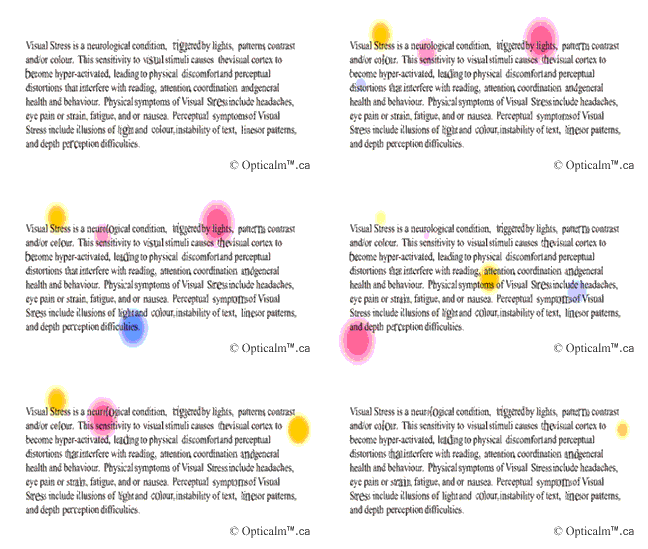
Visual stress refers to discomfort and print distortion brought about by pattern glare: certain repeating shapes, high contrasts and brightness. The most common form of this pattern glare is found when an individual is reading black text on a white background.
Pattern glare occurs in patterns that are unnatural, meaning our eyes and brain have to work harder than normal to interpret the image. One reason this occurs is due to over-excitement in the visual cortex (where the picture from the eyes are processed by the brain and given meaning). This over-activity can cause the visual symptoms of visual stress (e.g. the blurring of letters), and after a period of exposure to these symptoms is when physical symptoms can occur (e.g. headaches and eye tiredness); for some people this can be after 10-15 minutes, however for some it can be immediately.
Visual Stress is the most common term used in the UK, however it can also be known as Meares-Irlen Syndrome (named after the two researchers who first discovered the connection between white page “glare” and reading difficulties in the early 1980s), Visual Dyslexia, and Scotopic Sensitivity. However the latter is now considered by scientists to be a misnomer.
The reason visual stress occurs is not yet fully known, however there are some contributing factors that have been proven to cause an increase in symptoms of visual stress:
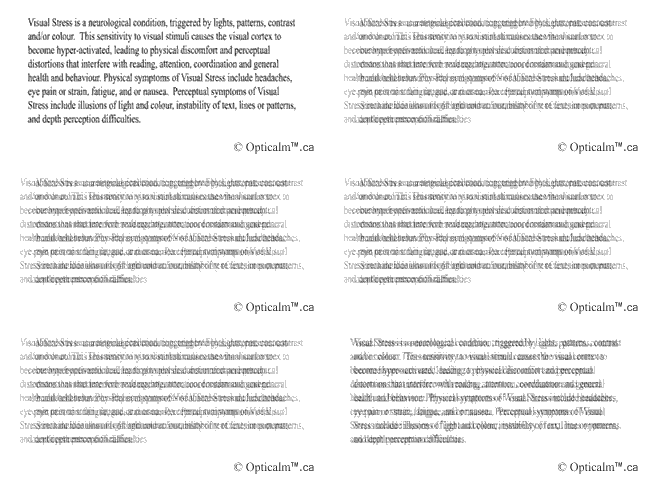
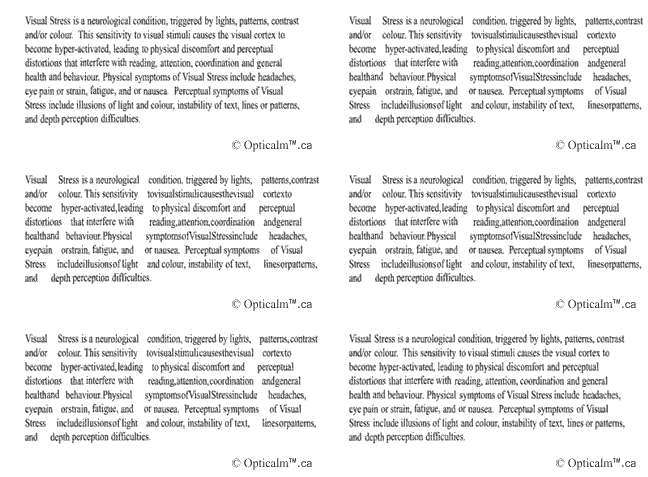
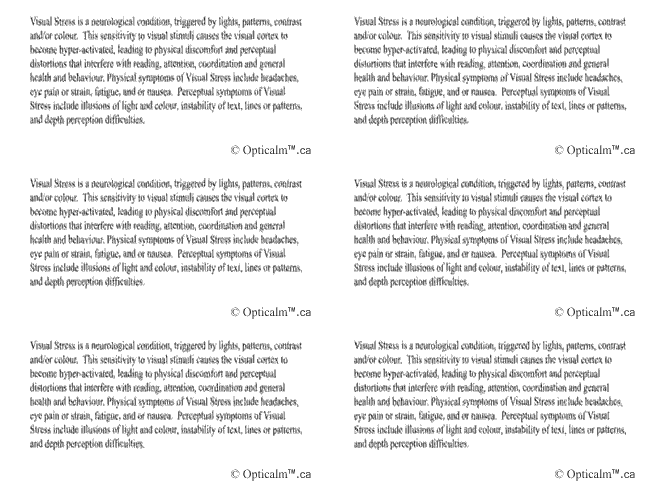
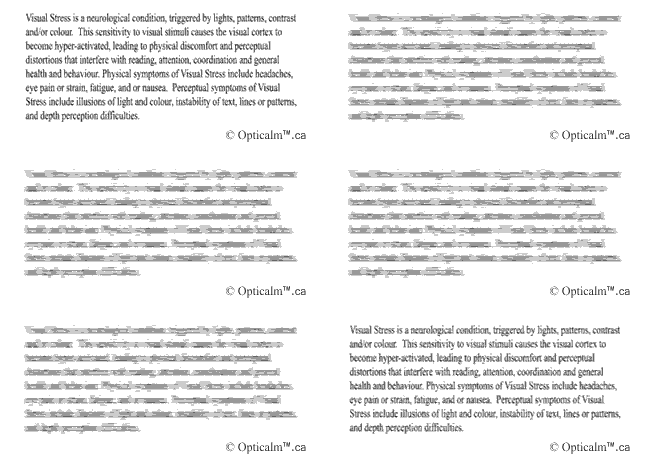
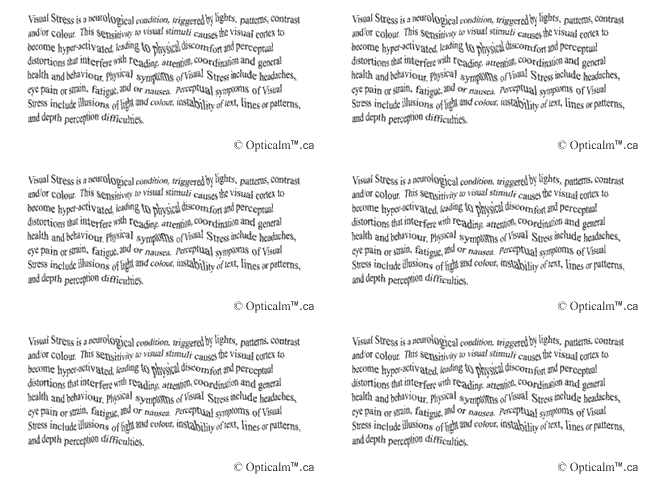
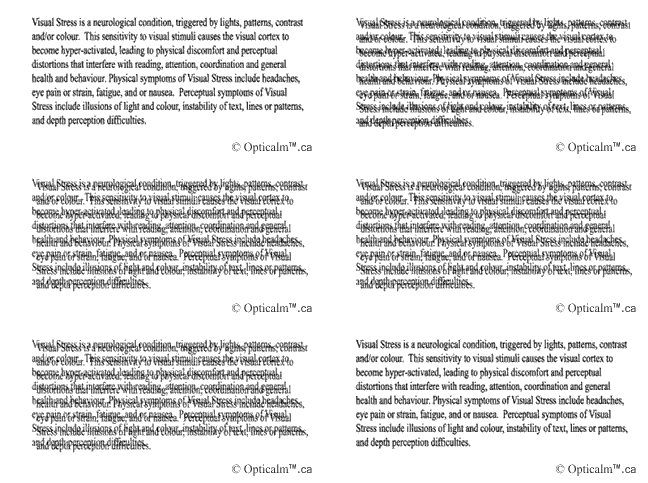
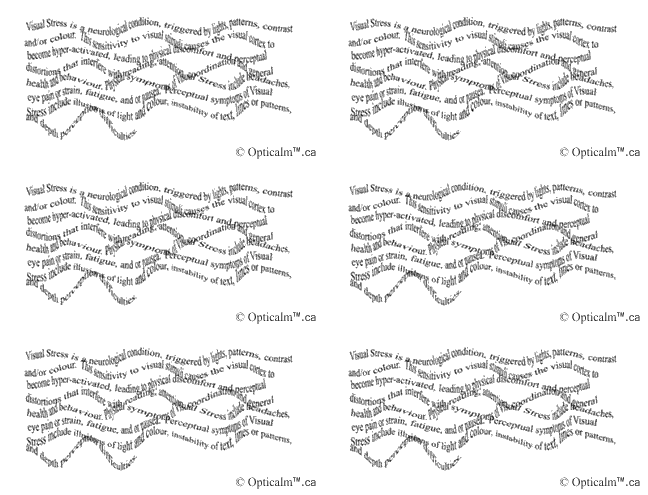
Visual Stress typically causes the following distortions of print, although not all of the following will necessarily be experienced by one person:
How the symptoms of Visual Stress can effect an individual
While reading and writing sufferers may
Overlays
Overlays are a good tool to initially investigate if colour might help mitigate symptoms but are not usually a long-term solution. Overlays are not as convenient as spectacles as they are not suitable for computer or white board work and the range of colours is limited.
Next steps
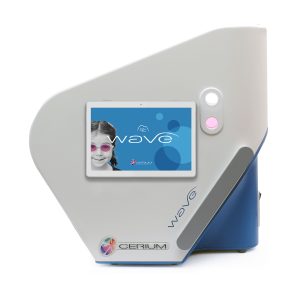
If after 3 months the Cerium coloured overlay is still providing benefit, it is recommended that you visit a Cerium specialist eye care practitioner for an assessment using the Intuitive Colorimeter™. This allows a much wider exploration of colour space to ensure that you are benefiting from the most precise tint to achieve optimal results.
The precision tint will be provided in spectacle or contact lenses, and will include a Cerium Certificate of Authenticity.
| Cookie | Duration | Description |
|---|---|---|
| cookielawinfo-checkbox-analytics | 11 months | This cookie is set by GDPR Cookie Consent plugin. The cookie is used to store the user consent for the cookies in the category "Analytics". |
| cookielawinfo-checkbox-functional | 11 months | The cookie is set by GDPR cookie consent to record the user consent for the cookies in the category "Functional". |
| cookielawinfo-checkbox-necessary | 11 months | This cookie is set by GDPR Cookie Consent plugin. The cookies is used to store the user consent for the cookies in the category "Necessary". |
| cookielawinfo-checkbox-others | 11 months | This cookie is set by GDPR Cookie Consent plugin. The cookie is used to store the user consent for the cookies in the category "Other. |
| cookielawinfo-checkbox-performance | 11 months | This cookie is set by GDPR Cookie Consent plugin. The cookie is used to store the user consent for the cookies in the category "Performance". |
| viewed_cookie_policy | 11 months | The cookie is set by the GDPR Cookie Consent plugin and is used to store whether or not user has consented to the use of cookies. It does not store any personal data. |